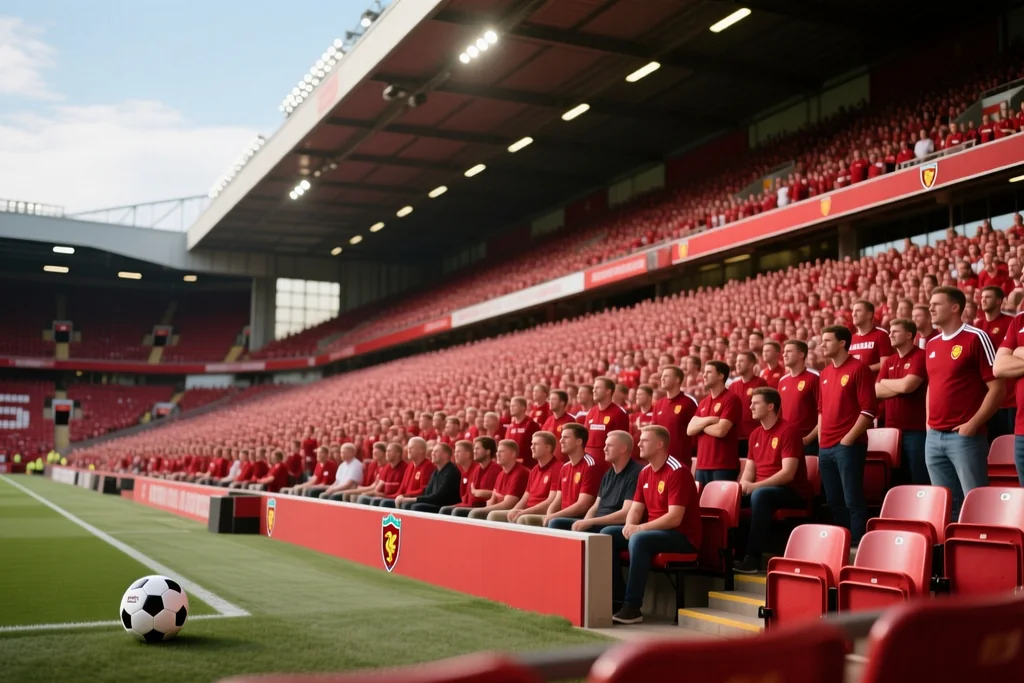
Debates about Indian football reach for the same explanations again and again: not enough coaching, not enough money, not enough talent. All three are worth discussing, but none of them is the constraint that presses on everything else. The calendar is. Where the season sits, how long it lasts and how it fits around the weather, the school year and the international windows decides how much of the other work actually gets done.
A season that fights the weather
India is not one climate. A calendar that suits one region can be impossible in another, and the monsoon turns parts of the country into a logistical puzzle for months at a time. When a season is compressed to avoid the worst of it, the cost is paid in recovery: fewer rest days, denser fixture lists and squads asked to perform at a level the body resists.
Clubs respond rationally. They rotate, they reduce training intensity and they accept a lower standard of football in the name of getting through the schedule. None of that is a failure of ambition; it is what any organisation does when the calendar leaves it no alternative.
Why windows and turnarounds matter
Every football season is a negotiation between three parties: the domestic league, the national team and the players. International windows take players away in the middle of club campaigns, which is normal everywhere but feels harder when the domestic season is already compressed. A club that loses its best players to a window also loses the training time it needed to integrate their replacements.
Turnaround times matter just as much. Two days between matches is not a challenge that intensity can fix; it is a challenge only rotation can survive. Clubs with deeper squads absorb it. Clubs without them drop points and then blame fitness, when the real cause was scheduling.
| Area | How the calendar affects it | Who feels it first |
|---|---|---|
| Player welfare | Recovery days available between matches | Players carrying a minor injury |
| Football quality | Time available for tactical training | Coaches introducing a new system |
| Squad building | How much depth a club genuinely needs | Clubs without a strong bench |
| National team | Availability of players inside each window | The head coach and his selection |
Read that table as a chain rather than a list. Poor recovery leads to lower intensity, lower intensity leads to poorer football, and poorer football makes it harder to attract the audience and the investment that would give clubs the squad depth to cope in the first place. The calendar is not a background condition; it is the first domino.
What a better calendar would change
A well-designed season does not simply avoid the worst months. It builds in rhythm: a pre-season long enough to install a style, a competitive block dense enough to create momentum, and windows aligned so that clubs and country are not pulling in opposite directions. None of that demands new money. It demands agreement, which in a country with as many stakeholders as India is the hard part.
The calendar is the one part of Indian football that every club, every player and the national team has to share.
What to watch beyond the fixtures
- Whether the gaps between matches are long enough for a coach to change something meaningful
- How clubs use the congested stretches — rotation is a sign of planning, not of weakness
- Whether young players get minutes when the schedule tightens, because that is when squad depth is truly tested
There is a second-order effect that rarely gets mentioned. A predictable calendar lets clubs sell tickets, plan travel and build commercial partnerships, all of which feed back into the money available for players. Uncertainty is expensive in ways that never appear on a balance sheet but always end up on the pitch.
Frequently asked
Why is the calendar such a big issue in India specifically? Because the climate varies so sharply across the country that no single set of dates suits every region, and the monsoon rules out a large part of the year.
Can clubs simply train harder to cope? Only up to a point. Recovery is a biological limit, and no coaching method overcomes a schedule that does not allow it.
Coaching badges and transfer budgets will always attract more discussion than a fixture list. But if you want to know why Indian football improves in some seasons and stalls in others, start by looking at when the matches are played. That is the lever nobody photographs, and the one that quietly shapes almost everything else. Follow how the season unfolds on our Indian football and ISL fixtures pages.