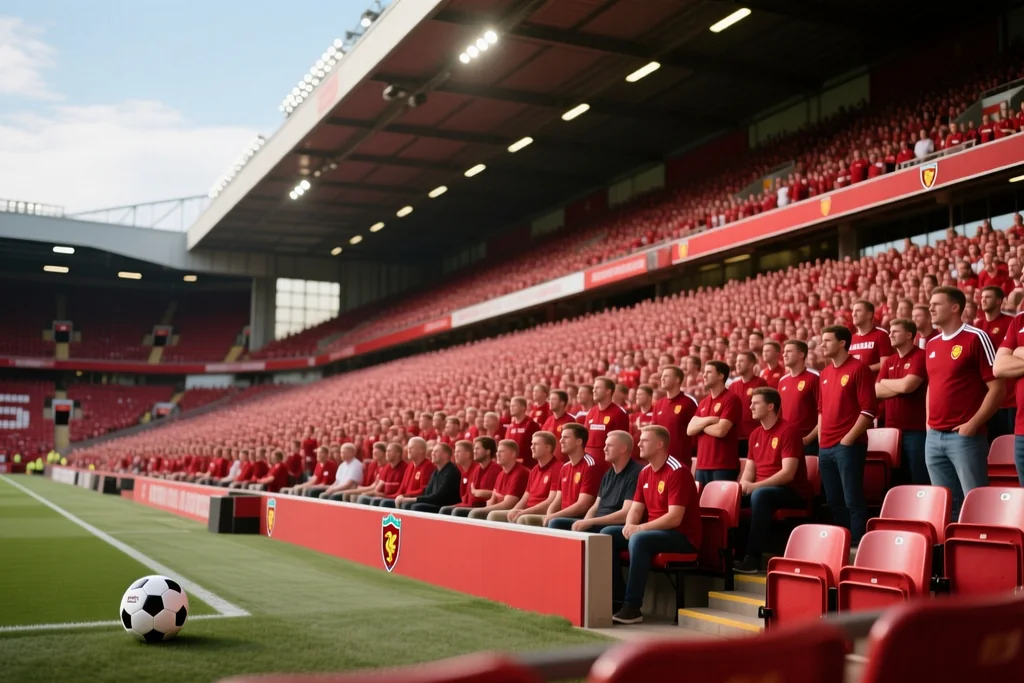
There is a region of India where the football-versus-cricket argument was settled generations ago. In the north-east, football is not an alternative to the national obsession; it is the sport the region grew up with, and it shapes everything from school playgrounds to state identity.
That cultural fact has a sporting consequence which reaches the national team. A large share of the players who have broken into Indian football over the past two decades learned the game in the states of the north-east, and the region's influence shows no sign of fading.
A region where football comes first
The reasons are partly historical and partly practical. Football arrived early and embedded itself in local communities, and the region's states built football cultures that reward technical players rather than pure athletes. Smaller, quick-footed footballers with close control find a game that suits them, and the coaching they receive tends to value exactly that.
The result is a playing identity that is recognisable across the country. Footballers from the north-east are often described in terms of their touch and their willingness to run at defenders — qualities that come from thousands of hours on tight pitches where the ball never stops moving.
Why the talent travels
A talent pool only matters if it can reach the professional game, and for years the north-east's players had to leave home to do so. Clubs in Kolkata and the big metropolitan leagues were often the first stop, and from there the route opened towards the top division. That migration is a sign of ambition, but it comes at a cost: a young player who moves a long way from home at fifteen is being asked to grow up faster than his peers.
Domestic clubs have learned to scout the region deliberately. A player who has competed in its state and age-group football arrives with match experience that a purely academy-trained player may lack, and the adaptation is usually about lifestyle rather than about football itself.
| Dimension | Why it matters to the national game |
|---|---|
| Playing culture | Football is the first sport, so technique starts earlier |
| Small-sided football | Produces close control and improvisation under pressure |
| Competitive state football | Gives young players real matches before they turn professional |
| Regional pride | Turns a club into a cause rather than a team to watch |
The last row is the easiest to underestimate. When a club represents a region whose identity is bound up with football, the crowd behaves differently and the players carry a weight that can sharpen them rather than crush them. Domestic football in India is at its most alive wherever that bond exists.
What clubs get from the region
For a professional club, the north-east is a source of players and of support in roughly equal measure. Signing from the region is not a box to tick on a development plan; it is sound football business, because the players are ready for senior football earlier and the supporter base responds. A club with a genuine north-eastern connection gains an audience that turns up in numbers and takes defeats personally.
The strongest domestic football cultures in India are not the richest ones. They are the ones where the game was never asked to justify itself.
The challenge is to keep the pathway open without asking every young player to leave at the earliest opportunity. Better regional football, more competitive fixtures and stronger youth structures would allow more of the region's talent to develop closer to home, arriving at professional clubs as finished players rather than as projects.
What to watch as the pipeline grows
- Whether more of the region's young players get first-team minutes without having to move twice
- How clubs balance local scouting against academy investment, because both are needed
- Whether a stronger regional base translates into more players in the senior national squad
Frequently asked
Why is football so strong in the north-east? Because it is the region’s first sport, played and watched from childhood, which builds technical players long before any academy gets involved.
How can I follow the region’s clubs? Through our club pages, which carry the teams and their context through the season.
The north-east is not a curiosity in Indian football. It is one of the reasons the game has a domestic identity at all, in a country where that identity has to be earned every single season. Following its clubs through the year — starting with the NorthEast United page and the wider club directory — is one of the better ways to understand where Indian football is heading next.